

Aesthetic medicine has come a long way in recent years, and so has patient demand.
Today, our patients want to look their age, but do it well. They are aware that maintaining
the quality of their skin is essential.
What are the benefits of a global approach to skin aging?
Facial ageing is not just about wrinkles or loss of volume, but about a
series of mechanisms that reveal :
- pigment spots
- sagging skin
- uneven skin texture
- altered skin elasticity and plumpness
- dehydration
- a dull complexion, …
It’s tempting to correct wrinkles or restore volume with injections, as the results are
immediate and patients are often very satisfied. Unfortunately, the only way to achieve harmonious results
and lasting results over time is to take a comprehensive
approach, which also takes into account the quality of the skin.
Moving away from “injectables only
The aesthetic physician is the architect of the face.
He doesn’t just inject: he builds a long-term strategy, taking into account the different anatomical layers of the face. This is what modern “5-layer” techniques are all about, enabling the right treatment plan, the right gesture and the right combination of techniques to be chosen for each patient.
Obviously, responding to the patient’s immediate request is important, but the
aesthetic physician must consider the whole face’s identity in his or her treatment plan.
Educating patients on how to prevent aging phenomena and maintain
healthy, luminous skin is an integral part of an aesthetic physician’s role.
Aesthetic medicine still suffers from its association with over-injected faces.
Repeated injections, performed alone, without a long-term strategy or in the wrong anatomical plane, rarely produce natural results. This is why training in modern techniques for analyzing and treating the 5 layers of the face is essential if we are to offer safer, more harmonious and longer-lasting aesthetic medicine.
Why combine several techniques?
A solution for every problem:
- improve skin surface (microneedling, peels)
- maintain skin hydration and vitality (mesotherapy)
- even out skin tone (IPL pulsed light)
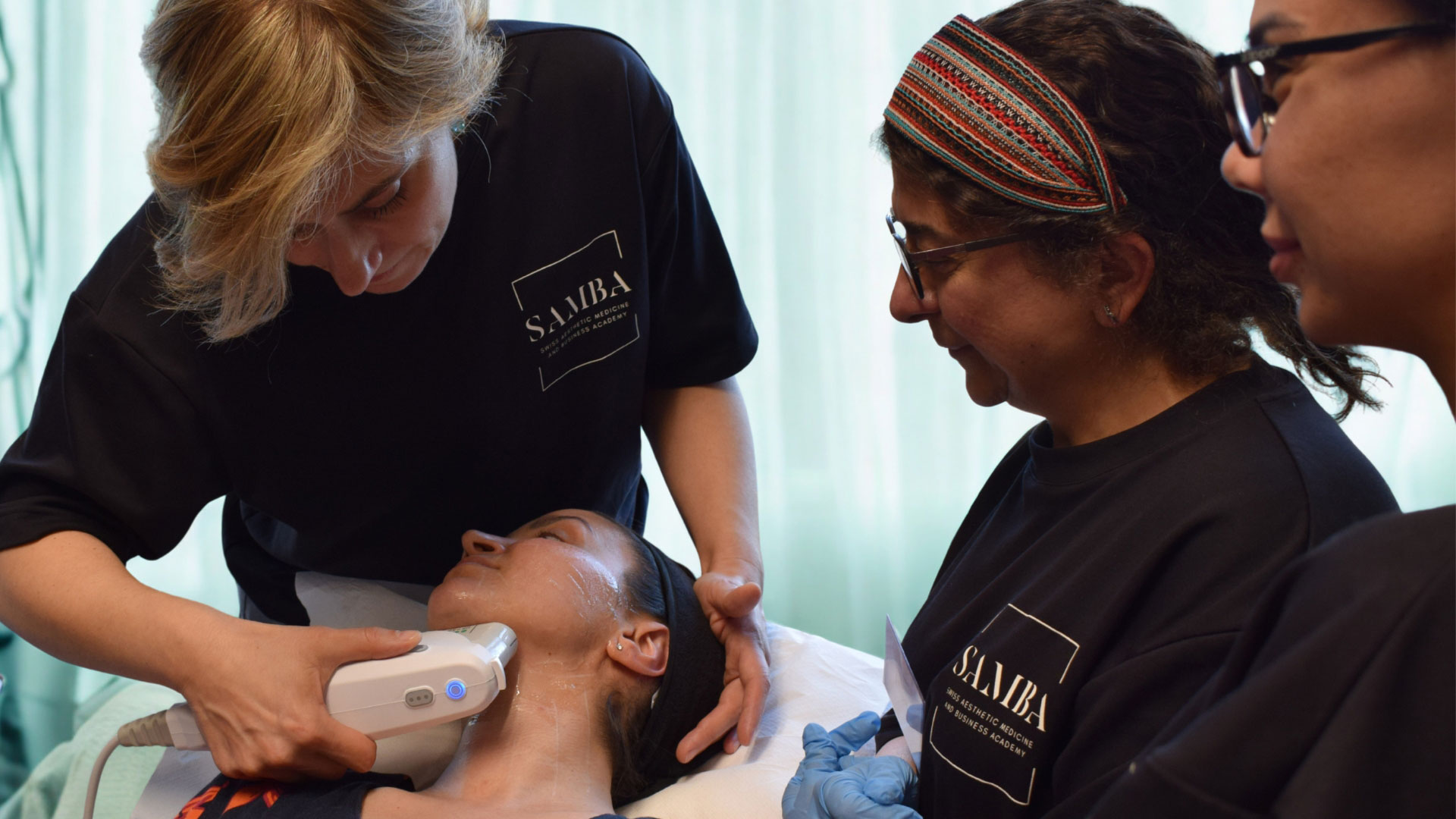
- restore tissue tension and stimulate fibroblasts (radiofrequency, ultrasound, PRP)
- then correct or restore with botulinum toxin and hyaluronic acid
All these techniques complement each other and help to build long-term loyalty among your
patients.
In this way, you offer a holistic approach to ageing, with a long-term vision, and
not just an immediate response. At this stage, aesthetic medicine is a wonderful playground
where each patient is treated in a personalized way, and where his or her identity and personality
are taken into consideration.