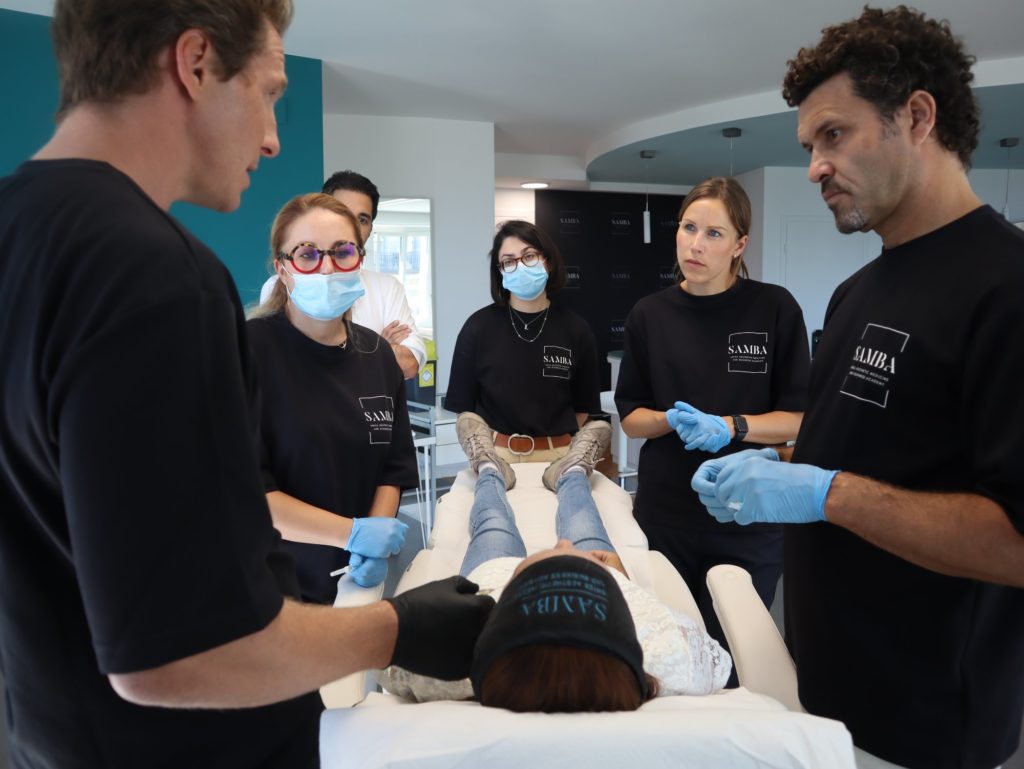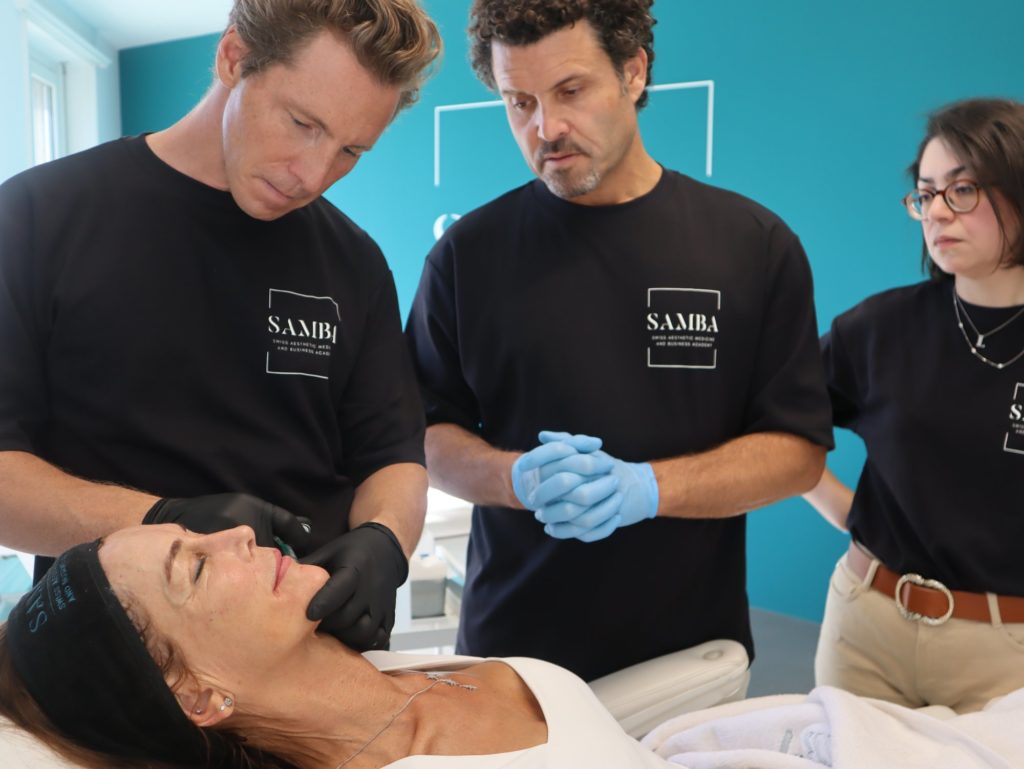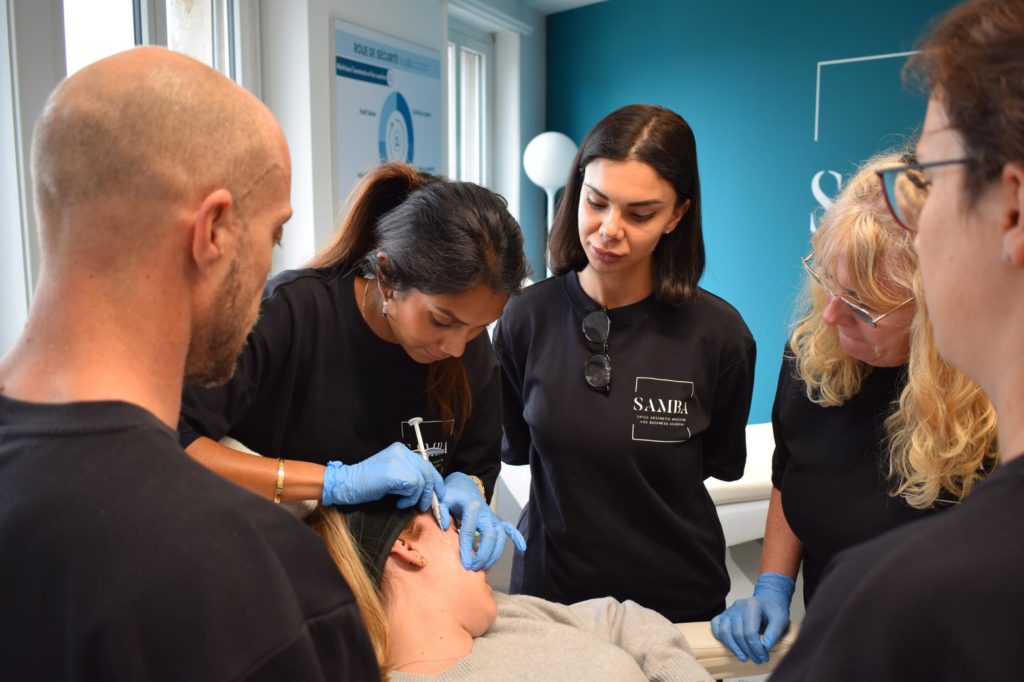


Biostimulation with calcium hydroxyapatite (CaHA) is one of the so-called collagen-inducing treatments used in aesthetic medicine. More than simply filling the gap, these products aim to improve deep-tissue quality, with both a tightening and restructuring effect. In this article, we take a look at how CaHA works, its main indications and the key points for safe use in practice.
Why are we talking about it more and more?
Injectable biostimulants have been booming in recent years, and the trend is growing stronger every year.
In my view, there are two main reasons for this phenomenon.
- Firstly, new biostimulant injection protocols have significantly reduced the inflammatory and granulomatous side-effects of these products, giving practitioners greater confidence. These new protocols are essentially based on the principle of product dilution and reinforced asepsis rules.
- Secondly, biostimulants appear to be “longer-lasting, more natural” (in terms of effects) than volumizing fillers like hyaluronic acid.
In truth, only one recipe works ➡️ COMBINED TREATMENTS:
Injection of biostimulants, hyaluronic acid or botulinum toxin
+
Collagen stimulation by radiofrequency or HIFU
+
Dermo-epidermal treatment with laser, microneedling, peeling, mesotherapy, PRP
+
A healthy lifestyle and appropriate cosmetology
+
Good TRAINING to carry out treatments
=
Satisfied, grateful patients
These biostimulants fit perfectly into the era of modern aesthetic medicine, which promotes the combination of techniques and treatments to achieve long-lasting, harmonious results.
Back to calcium hydroxyapatite (CaHA)
How does it work?
CaHA consists of calcium microspheres (that’s why the product is white) in a carrier gel based on sterile water, glycerine and carboxymethylcellulose for Radiesse (Merz) and hyaluronic acid for Harmonyca (Allergan).
After injection, there are two expected effects:
An immediate tensor effect due to the carrier gel. This effect is appreciable, but not very long-lasting, as the carrier gel resorbs rapidly. It lasts longer with hyaluronic acid.
What’s interesting is the second expected effect, which is more long-lasting.
It has a tightening effect on the skin by stimulating the production of type 1 and 3 collagen.
Two mechanisms come into play:
- Mechanical stimulation: small calcium spheres titillate fibroblasts
- Metabolic stimulation; calcium breakdown
How is it injected?
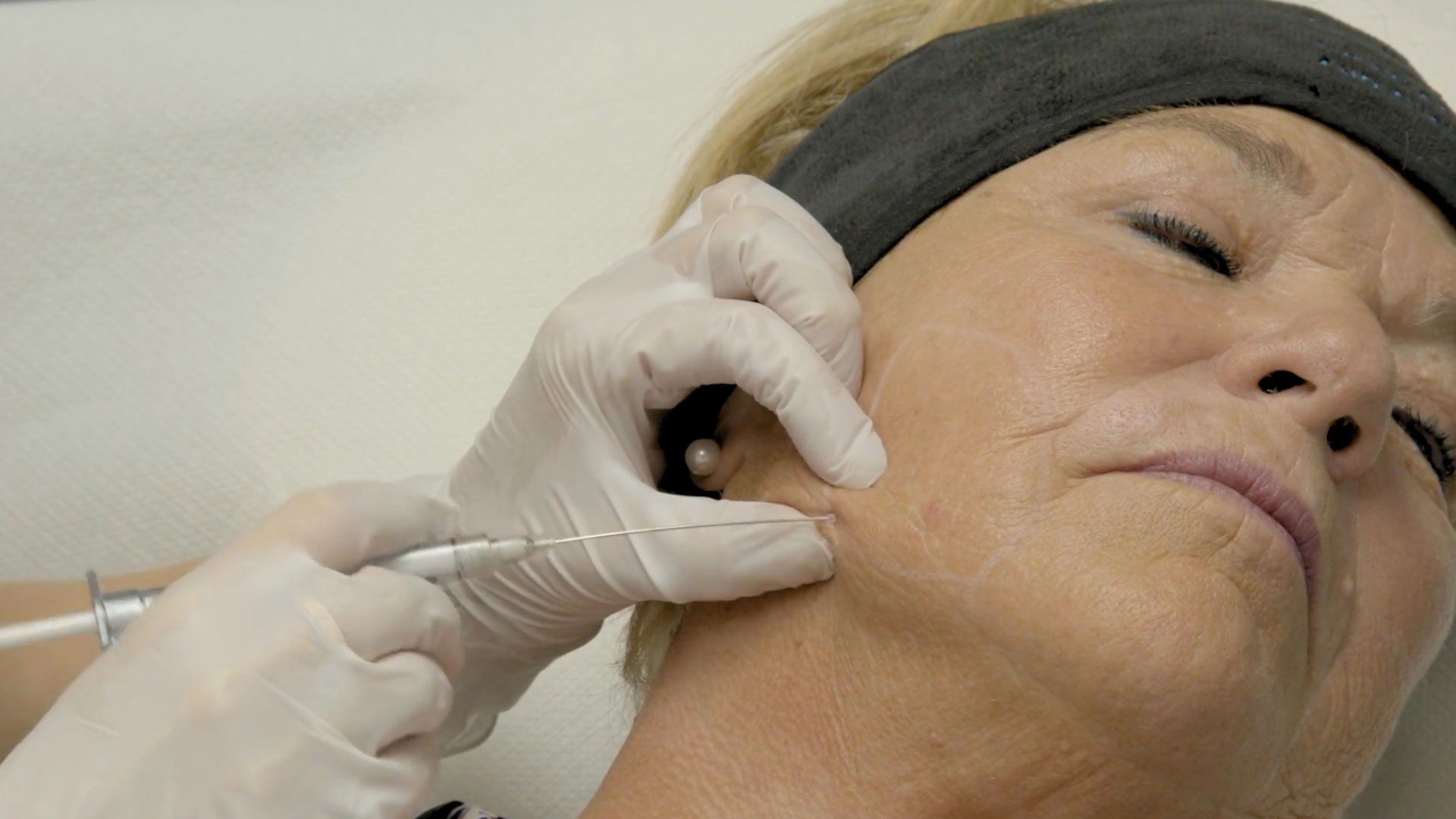
In biostimulation, CaHA is injected into the subcutaneous layer using a cannula (25G or 22G).
Injection is carried out using the fanning technique with retractile injection.
It’s important to master this technique to avoid making clusters or nodules of CaHA that could generate undesirable inflammatory reactions, or even granulomas.
For Radiesse
Radiesse is first diluted 1, 2 or 3 times with physiological serum, depending on the indication (face, neck, décolleté, body) and the practitioner’s habits.
The product should be diluted to reduce the risk of secondary inflammatory reaction.
Harmonica is injected directly, as delivered, without dilution.
All these elements need to be understood, learned and mastered before embarking on CaHA injection biostimulation.
As always, a mastery of the injections in the 5 layers (cutaneous, subcutaneousdeep fat, SMAS, periosteum) is an essential prerequisite.
The main indications
In fact, once you know how to dilute the product, observe strict asepsis and, above all, have learned how to inject into the subcutaneous plane with fanning, you can apply CaHA to almost any part of the body if there is skin laxity.
But these indications are frequently found:
Face, neck, décolleté, abdomen, knee, inner thighs, inner arms.
I apply a ratio of one 1.5ml ampoule diluted twice for an area equivalent to the palmar surface of the hand.
Injection of undiluted Radiesse
Radiesse is supplied in 1.5 ml syringes with (Radiesse +) or without lidocaine.
Some inject it into the periosteal plane for a tightening effect by repositioning deep fat compartments. It is also injected purely into the subcutaneous plane to contour the mandible, chin or even the nose.
This is not a technique I recommend, as the inflammatory risk is much greater and intravascular injection is very serious, as hyaluronidase has no effect on CaHA.
In a nutshell
CaHA is a high-quality biostimulant that should be part of the therapeutic arsenal in aesthetic medicine. It requires good basic and specific training. It must be integrated into combined treatments to deliver long-lasting, safe and harmonious results.