

Today, more and more doctors want to integrate aesthetic medicine into their practice.
But between the absence of an officially recognized specialty in most countries, the proliferation of private academies, and widely varying levels of quality, it’s often difficult to know how to train seriously.
However, in aesthetic medicine, it’s not enough to attend a few demonstrations to be ready to treat patients. You need to understand the legal framework, choose evidence-based training, and above all learn to practice in a progressive, supervised and safe manner.
A reminder of the law
In most countries, only a medical doctor is authorized to perform medical procedures for aesthetic purposes.
Hyaluronic acid is classified as a medical device; class 4 lasers are so powerful that they can only be used by a doctor; and botulinum toxin is classified as a drug and therefore subject to prescription. All these factors reinforce the need for a doctor to deliver or supervise such treatments.
The skin break (often considered if depth > 0.5 mm) often represents the anatomical boundary between medical aesthetic care and institute care.
In some countries, nurses are authorized to perform aesthetic medical procedures, such as hyaluronic acid injections, subject to initial certified training.
In Switzerland, hyaluronic acid injections can be performed by specially trained nurses under the direct responsibility of a doctor on the premises.
Training obligation
Medical doctors must complete their curriculum with training adapted to their practice of aesthetic medicine.
With the exception of a few countries (Belgium, Netherlands), aesthetic medicine is not a recognized and listed medical specialty.
As such, it is not part of any conventional university curriculum.
It is therefore the responsibility of every practitioner to provide sufficient training in the aesthetic medical procedures they wish to offer their patients.
In the event of a control or conflict with a patient, the practitioner must be able to demonstrate appropriate, scientifically valid training, recognized by a medical or university training body. If this is not the case, the practitioner may be penalized not only by his or her profession, but also by the law.
It is therefore essential to choose a recognized basic training program, based on evidence-based medicine and delivering recommendations for good practice in aesthetic medicine.
Don’t choose a course whose content is based solely on the testimonials and experiences of practitioners, as these can lead to false beliefs and even untruths.
You need to choose a training program that delivers consensus-based content and corresponds to the day-to-day practice of modern aesthetic medicine.
You need to choose a course that includes the theoretical fundamentals, but above all supervised practice.
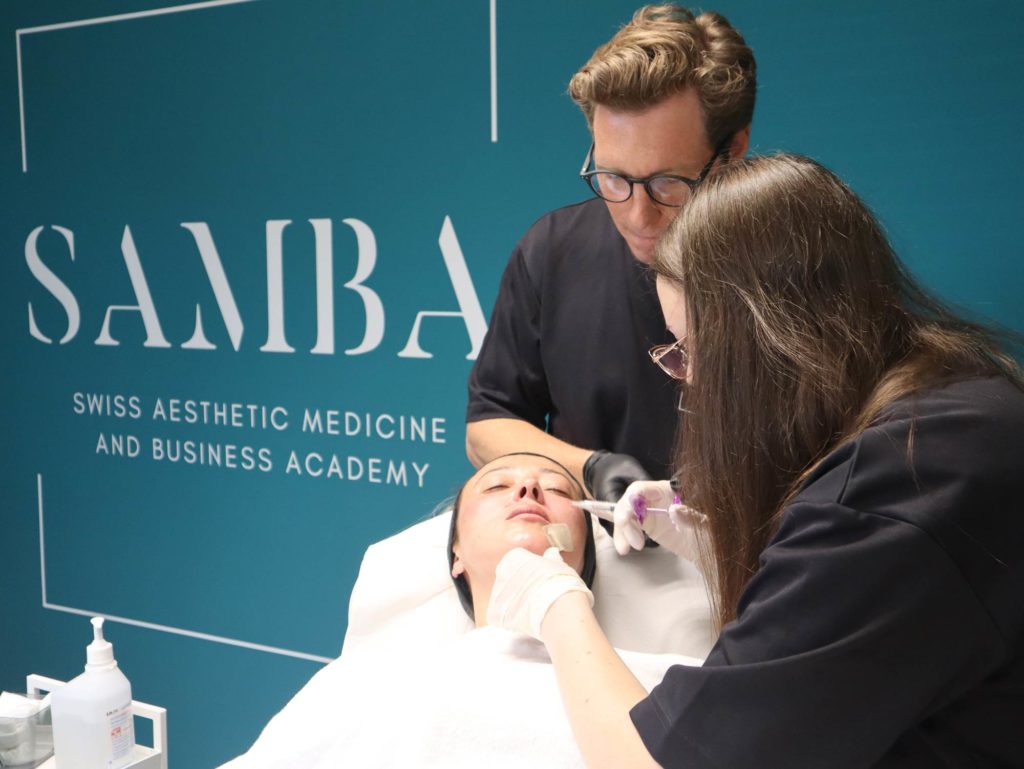
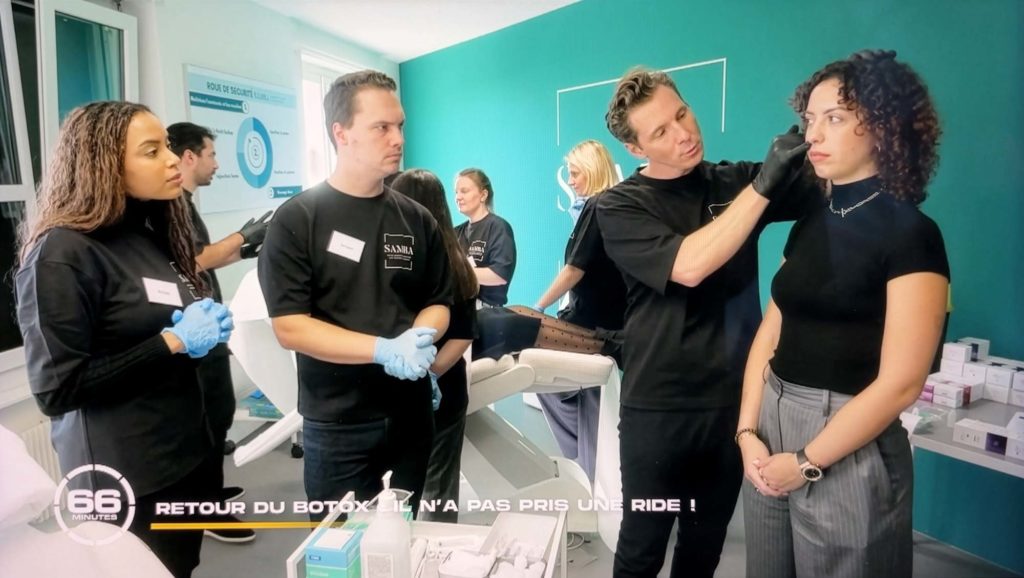
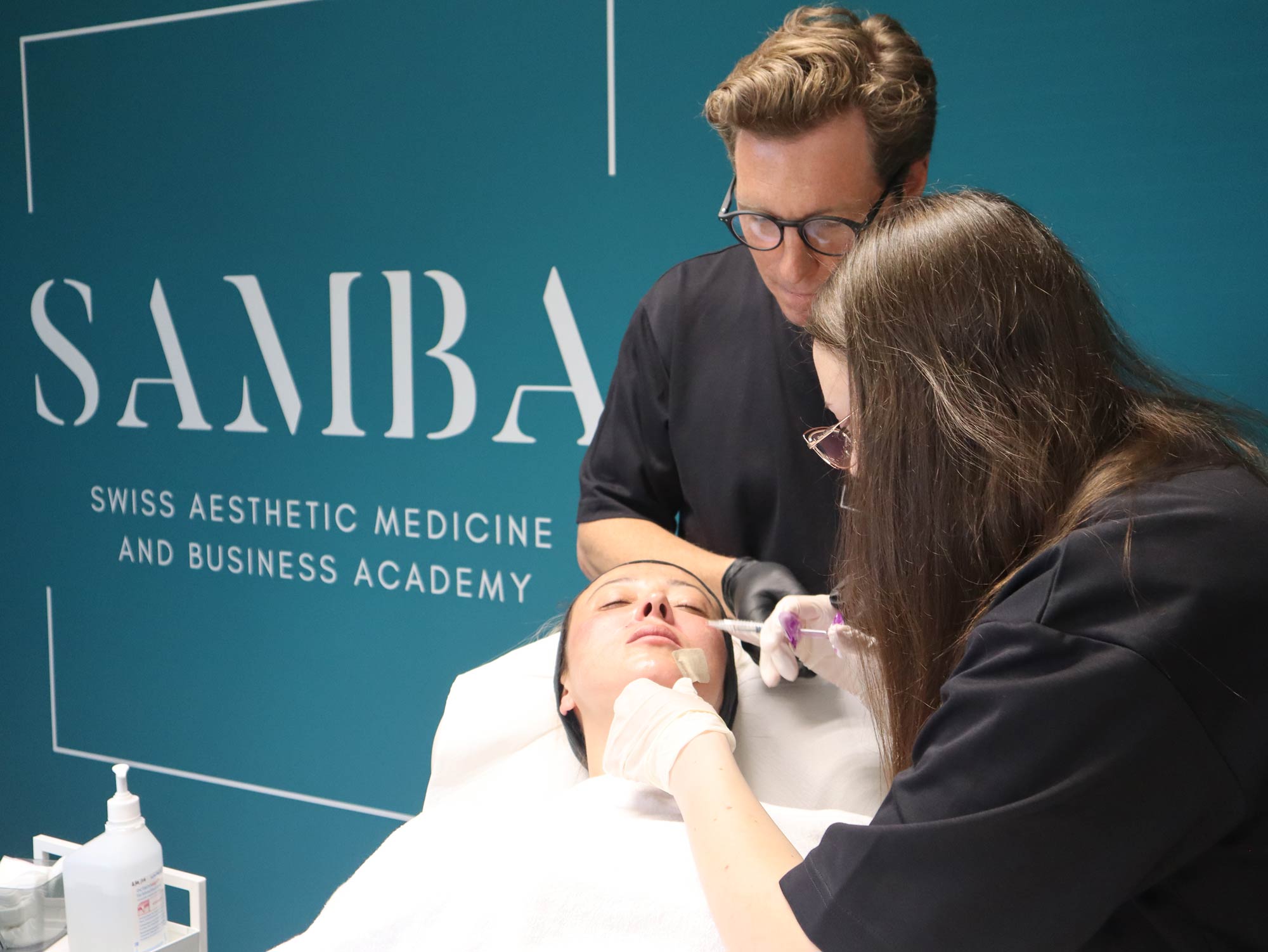
Choose a small-group, supervised hands-on training program that allows you to do, not just observe.
There is a fundamental difference between performing an injection or laser treatment and simply observing. To guarantee this, you need to choose a training course that offers practical sessions in small groups, with plenty of models to choose from.
You shouldn’t opt for practical training in observation groups, with an expert commenting on his or her own practice. You need to be the actor in your training, to feel the tools, the patient’s reaction, the effects of the treatments.
Integrate training into your day-to-day work as a specialist
Alternating supervised and independent practice
Ideally, training should include supervised practice sessions and intervals of independent practice in your own practice.
Supervised practice phase
Supervised practice takes place in your academy at regular intervals. It should be an intense time during which you can ask any useful questions and carry out treatments that you will then integrate into your independent practice.
To ensure that you perform the acts yourself, make sure that student groups do not exceed the ratio of one model and one expert for every four students.
Independent practice phase
You implement the first simple treatments you learned during your supervised practice session.
During this phase, you need to be able to keep in touch with your teachers and the community, so as to be helped in setting indications and delivering your first aesthetic medicine treatments to your patients.
Then, after one or two months, return to the training center to discuss your difficulties and learn new techniques that you can gradually integrate into your practice.
This alternation of supervised practice and independent practice with mentoring is the most effective formula for gradually becoming a specialist in aesthetic medicine while maintaining your original activity.
Aesthetic medicine training courses
Please note: there is only ONE training program that meets all the criteria required to become a true specialist in aesthetic medicine.
Can you find it?
Aesthetic medicine training courses in Switzerland
Swiss Aesthetic Medicine and Business Academy (SAMBA).
The only European diploma certified as Continuing Medical Education and UEMS accredited (CME/CPD certified).
Aesthetic medicine training courses in France
Public university
- DIU (Inter-University Diploma) (Bordeaux, Créteil, Marseille since 2024/2025). Often mixed training (online theory, hands-on practice), lasting from a few months to two years.
Private
- International College of Aesthetic Medicine (CIME)
- AMIR Aesthetic Medicine
- MAM Academy
Aesthetic medicine training courses in Italy
- The Master in Aesthetic Medicine at the University Federico II of Naples is a specialization course designed for doctors and surgeons. It aims to train professionals capable of performing complex facial treatments with expertise and safety, including remodeling techniques, all based on scientific evidence.
- AIMS – Level II university master’s degree in aesthetic and anti-aging medicine.
- Master’s degree in aesthetic medicine in facial remodeling from UCAM.
Aesthetic medicine training courses in Spain
- TECH España: offers a six-week online certificate in aesthetic medicine applied to anti-aging (6 ECTS), including complications management.
Aesthetic medicine training courses in the Balkans
- Western Balkans University (WBU) (Albania): organizes two-day training courses on dermal fillers and botulinum toxin, including the prevention and management of complications.
- Turkey (Istanbul): centers such as Estetik International offer advanced training in aesthetic medicine and surgery, attracting practitioners from all over the Balkan region.
Aesthetic medicine training courses in North Africa
- DUTIC (Université Paris-Est-Créteil / SOMMEA): university diploma in injection and filling techniques, hybrid, for doctors. Morocco (Casablanca/Rabat).
- Center Mohammed VI de Formation Continue (UM6SS): DU Dermocosmetology (six months) and DU Lasers, aesthetic and reparative dermatology.
- ISUPMEDICAL-ACADEMY: training courses in aesthetic and anti-aging medicine, including workshops (Marrakech, Tangier, Rabat).
- ISTYA Aesthetic: Anatomy Summer School, focusing on facial anatomy and injection techniques (Tunisia).
Aesthetic medicine training courses in the United Arab Emirates
- Waaam Academy: offers training courses in aesthetic medicine with practical internships.
- Aesthetic Medicine Privilege Board Program (Dubai): practical training covering the fundamentals up to the diploma.
- OTHM Level 7 Diploma in Aesthetic Injectables (Abu Dhabi): offered by Vilafortuny and Derma Institute.
- Specialized programs for physicians, such as those offered by AECS.
Conclusion
As you can see, training in aesthetic medicine isn’t just about collecting certificates or observing a few experts in action. It’s about acquiring solid fundamentals, understanding indications, risks and complications, and above all developing a progressive, supervised, reproducible and safe practice.
Good training must therefore enable you to do and understand what you’re doing, and to be able to gradually integrate these treatments into your daily activity in a methodical and safe way. In aesthetic medicine, more than in many other disciplines, the quality of training directly conditions the quality of care delivered to patients.